

Corrosion Testing Services Clone
ISO/IEC 17025 Corrosion Testing Services
Corrosion Testing for Materials, Coatings, and Product Qualification
Micom Laboratories is an ISO/IEC 17025-accredited corrosion testing laboratory in Montreal offering salt spray testing, cyclic corrosion testing, humidity exposure, immersion testing, seawater exposure, freshwater exposure, and custom corrosion test programs for manufacturers in Canada and the United States. Commonly requested methods include ASTM B117, ASTM G85, ASTM D5894, SAE J2334, ISO 9227, selected MIL methods, and customer or OEM test requirements.
Manufacturers, engineers, and quality teams use corrosion testing to assess material durability, compare coating systems, qualify finished products, validate suppliers, and investigate corrosion-related failures. Micom supports corrosion test programs for aerospace, transportation, automotive, electronics, medical device, military, architectural, and industrial manufacturing applications.
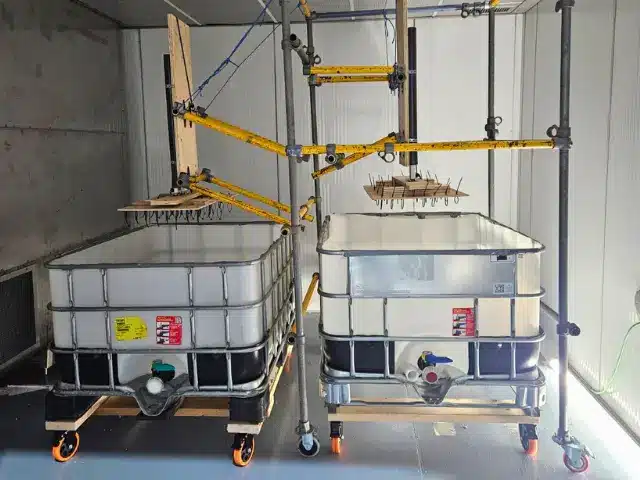
A corrosion test is most valuable when it answers a defined product question. Our team helps clients select the right method based on the material system, coating type, service environment, exposure conditions, acceptance criteria, and qualification requirements.
Need Corrosion Testing for Your Product or Materials?
Corrosion Testing Capabilities at Micom
Corrosion testing evaluates how metals, protective coatings, plated components, assemblies, and finished products perform when exposed to aggressive environments. Because service conditions vary widely, the right corrosion test method depends on the material, coating system, industry, product design, product application, and the decision the test results must support.
Micom Laboratories helps you determine which corrosion testing method best fits your product, coating system, qualification requirement, or failure investigation.
Our Corrosion Testing Services
Salt Spray Corrosion Testing
Salt spray corrosion testing is widely used to compare corrosion resistance in coated, painted, plated, or surface-treated samples. It is often selected for quality control, comparative benchmarking, supplier validation, and comparison with historical data.
Cyclic Corrosion Testing
Cyclic corrosion testing exposes specimens to controlled sequences that may include salt application, humidity, wetting, drying, and temperature changes. These methods are used to evaluate how materials, coatings, and components respond to repeated changes in corrosive conditions.
Humidity Exposure Testing
Humidity exposure testing evaluates how materials, coatings, assemblies, and finished products respond to high humidity, condensation, and moisture-driven degradation. It is useful for assessing blistering, coating breakdown, adhesion loss, corrosion initiation, and moisture sensitivity.
Immersion Corrosion Testing
Immersion corrosion testing evaluates how materials, coatings, and components perform when directly exposed to a liquid for a defined period of time. Test environments may include fresh water, salt water, or other solutions selected according to the product application and expected service conditions.
Custom Corrosion Testing
Not every product fits a single published standard. Micom can develop customized corrosion testing programs when the real service environment, geometry, assembly configuration, or failure mechanism is not well represented by an off-the-shelf method.
Custom programs may involve specialized fixtures, combined exposure phases, modified cycles, immersion setups, component-level testing, or test plans designed to compare multiple material or coating options under equivalent conditions.
Post-Exposure Evaluation and Reporting
Following testing, we perform visual examination of the samples, evaluate corrosion and coating degradation, and document other observations defined by the test method or test program. Results are recorded in documented reports that include test conditions, observations, and, depending on project requirements, photographs and evaluation criteria.
Most Requested Corrosion Tests Offered
| Standard | Method type | Best used for | Practical note |
|---|---|---|---|
| ASTM B117 | Neutral salt spray/salt fog | Coating comparison, quality control, supplier validation | Widely used; not a direct service-life prediction. |
| ASTM D1735 | Water fog/humidity | Water resistance of coatings using water fog | Often used to assess blistering and coating degradation. |
| ASTM D2247 | Humidity resistance | Painted or coated specimens in high humidity | Useful for moisture-related coating evaluations. |
| ASTM D4585 | Controlled condensation | Coatings and products exposed to condensation | Supports moisture and condensation performance evaluations. |
| ASTM D5894 | Cyclic salt fog / UV exposure | Paint coating systems on metals exposed to combined degradation factors | Combines corrosion and UV/weathering exposure elements. |
| ASTM G44 | Alternate immersion in salt solution | Comparative corrosion and stress-corrosion testing of metals and alloys | Alternate immersion testing for evaluating susceptibility to stress-corrosion cracking, with applicability to other forms of corrosion such as pitting, intergranular, and galvanic corrosion. |
| ASTM G85 (except A4) |
Modified salt spray | More specific corrosion environments | Useful when standard neutral salt fog is not sufficient. |
| ISO 11997-1 | Cyclic salt fog / dry/humid exposure | Evaluating coating resistance under changing corrosive conditions | Uses defined cycles combining wet salt fog, drying, and humid exposure. |
| ISO 9227 | Salt spray methods | Neutral, acetic acid, or copper-accelerated salt spray requirements | Common for international specifications. |
| SAE J2334 | Cyclic corrosion | Automotive and transportation applications | Useful for products exposed to changing wet/dry/salt conditions. |
| MIL-STD-810 Method 507.6 | Humidity exposure | Products and components exposed to warm, humid environments | Evaluates resistance to humidity, condensation, and moisture-related degradation. |
| MIL-STD-810H Method 509.8 I & II | Salt fog exposure | Military, defense, aerospace, and ruggedized products exposed to salt atmospheres | Evaluates material and coating susceptibility to corrosive salt environments. |
| ASTM D1654 | Post-exposure corrosion evaluation | Evaluating painted or coated specimens after corrosive exposure | Used to assess corrosion, coating failure, and creepage from a scribe after exposure. |
Accreditation note: Micom is ISO/IEC 17025 accredited by A2LA for selected corrosion and related test methods. Some methods may be performed under our quality system but may not be listed on the current accreditation scope. Contact us to confirm accreditation status for your specific standard.

“A corrosion test is only useful if it answers a specific product question. Otherwise, it’s just data.”
Michel Comtois, President, Micom Laboratories
M.Sc., Physical Chemistry | 40+ years of experience in material testing
Customer Approvals and Test Result Recognitions
Micom Laboratories holds customer-specific approvals from Bombardier, Airbus, De Havilland Canada, Hydro-Québec, andViking Air, and performs corrosion testing both for these organizations and for suppliers qualifying parts to their requirements. Our testing team is familiar with the documentation, traceability, and technical discipline required for supplier approval and product qualification work.
How to Choose the Right Corrosion Test Method
The best corrosion test depends on what you need to learn from the results. Each objective can lead to a different method.
| Objective | Typical Test Approach | Possible standards | What the result supports |
|---|---|---|---|
| Compare two or more coating systems | Salt spray or cyclic corrosion testing | ASTM B117, ASTM G85, SAE J2334 | Ranking of coating performance under equivalent exposure. |
| Qualify a product to a customer specification | Method required by the specification | ASTM, SAE, MIL, ISO, OEM methods | Evidence that the product meets defined requirements. |
| Evaluate changing outdoor or transportation conditions | Cyclic corrosion testing | ASTM G85, SAE J2334, ISO 11997 | Some cyclic corrosion methods may better reproduce relevant wet/dry/humidity/salt sequences than continuous salt fog; relevance depends on the product and service environment. |
| Assess painted or coated metal degradation | Cyclic salt fog / UV or humidity testing | ASTM D5894, ASTM D1735, ASTM D2247, ASTM D4585 | Assessment of blistering, rusting, coating breakdown, or adhesion-related issues. |
| Investigate a corrosion-related failure | Custom or failure-specific program | Standard plus project-specific exposure | Evidence aligned with the actual environment and suspected mechanism. |
| Evaluate direct liquid exposure | Immersion or water exposure testing | Project-specific or applicable ASTM/ISO methods | Compatibility with water, saltwater, process fluids, or cleaning solutions. |
Not Sure Which Standard Fits Your Project?
Our team can help you choose a corrosion test method based on your material type, coating system, expected environment, performance criteria, and project objectives.
Materials, Coatings, and Products We Help Evaluate
Micom Laboratories can evaluate a wide range of materials, coatings, and finished products for corrosion resistance, coating performance, supplier validation, product qualification and failure investigation.
- Metallic materials and alloys
- Coated and painted systems
- Powder-coated, liquid-coated, and conversion-coated components
- Plated components and surface-treated parts
- Fasteners, hardware, brackets, and assemblies
- Transportation and automotive components
- Aerospace parts and supplier qualification samples
- Electronics enclosures and assemblies
- Medical device components
- Architectural, industrial, and utility products exposed to moisture, salt, or humidity
Why Test with Micom
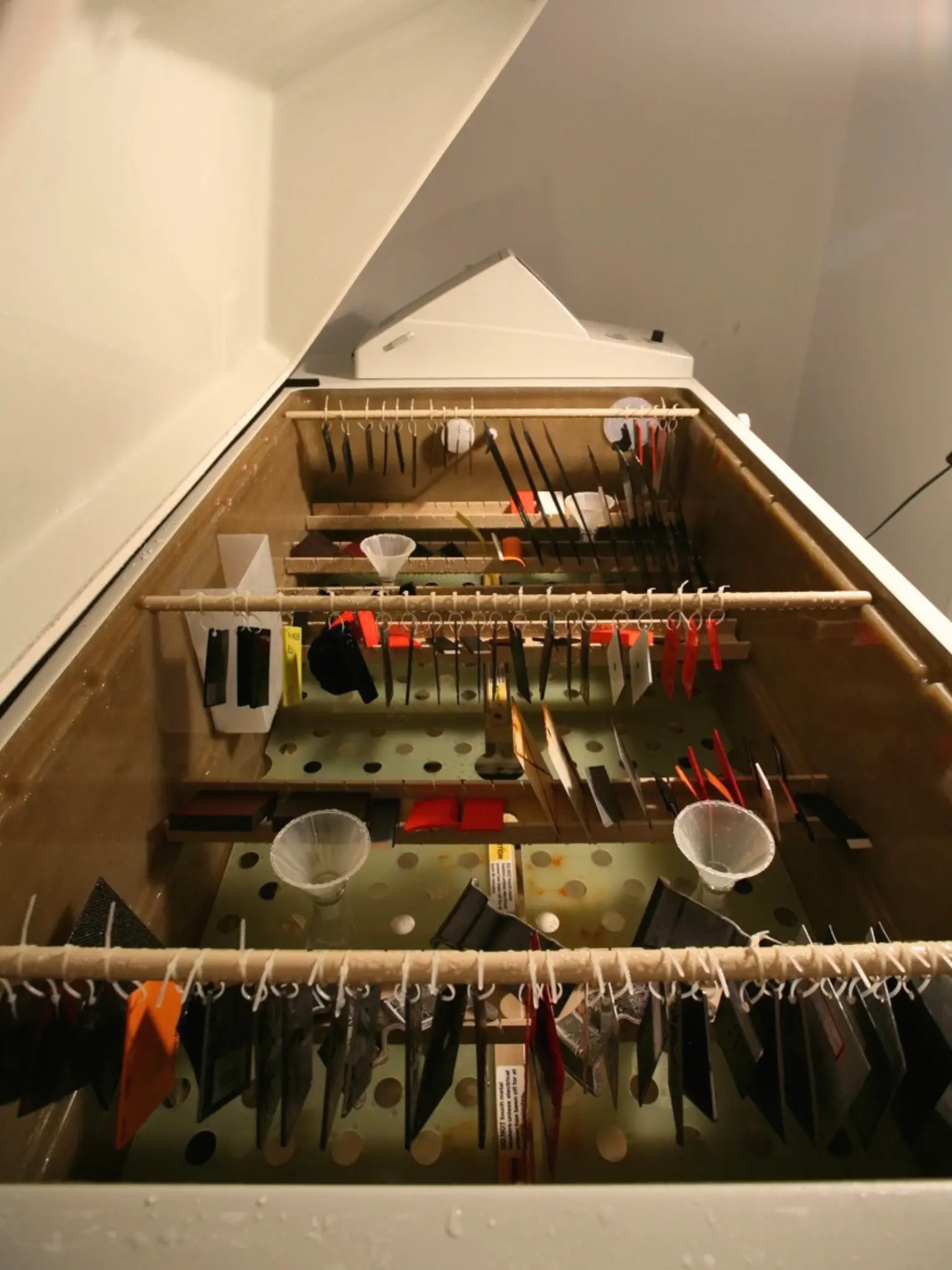
Micom operates multiple dedicated corrosion testing chambers, allowing concurrent test programs and reducing scheduling conflicts between projects. This helps clients who need to compare several coating systems, run parallel exposures, or meet product qualification deadlines.
Our corrosion testing is performed within an ISO/IEC 17025 quality system. Projects can include documented test conditions, sample identification, exposure duration, observations, photographs, evaluation notes, and formal reports that engineering and quality teams can use for product qualification, supplier approval, or regulatory submission.
Selecting the wrong corrosion test can waste time and produce data that does not answer the product question. Our material testing team works with you before testing begins to confirm the method, exposure conditions, sample configuration, and evaluation criteria.
Corrosion testing can range from short screening exposures to long qualification programs. We help you define realistic timelines based on sample preparation, chamber availability, exposure duration, inspections, reporting requirements, and project urgency.
What to Send Us for a Corrosion Testing Quote
Providing the right project information helps our team confirm the applicable test method, specimen requirements, testing scope, and reporting needs.
When requesting a quote, please provide:
- Standard, test method, or customer specification, if known
- Number of samples
- Sample dimensions
- Material and coating type
- Required exposure duration
- Acceptance criteria
- Required reporting format
- Accreditation requirements
- Project deadline
- Whether accredited results are required
If you are unsure which standard applies, send us your product description, expected service environment, and the decision you need the test results to support. Our team can help define an appropriate test plan.
Micom is accredited by A2LA to perform various ASTM tests as well as many other test methods.
Understanding Corrosion
Corrosion is the deterioration of a material, usually a metal, caused by reactions with its environment. It can affect structural integrity, appearance, coating performance, electrical continuity, safety, reliability, and lifecycle cost. For manufacturers in Canada, the United States, and across the world, corrosion is both a technical and commercial risk, which is why testing early in product development or supplier qualification can prevent expensive field problems later.
Common corrosion mechanisms include galvanic corrosion, pitting corrosion, crevice corrosion, intergranular corrosion, filiform corrosion, fretting corrosion, stress corrosion cracking, and microbiologically influenced corrosion. Identifying the likely mechanism helps guide test selection, sample preparation, inspection frequency, and evaluation criteria.
Read Our Free Corrosion Testing Guide
Our testing experts have created a practical guide that covers corrosion mechanisms, common test methods, test-planning considerations, and the limitations of accelerated corrosion testing.
Why Work with a Corrosion Testing Laboratory in Montreal
Micom Laboratories is located in Montreal, Quebec, at the center of one of North America’s most active aerospace and advanced manufacturing regions. Manufacturers in the Montreal area, across Canada, and throughout the United States can ship samples to our laboratory for corrosion testing, product qualification, and supplier validation projects.
For many standard test coupons, coated panels, and components, samples can be shipped directly to us without specialized freight or complex logistics. Results, reports, and technical correspondence are available in English and French.
No matter where you’re shipping samples from, our team can help define a corrosion test plan aligned with your product, timeline, and performance goals.
For related services, explore our pages on ASTM B117 testing, ASTM G85 testing, coating testing, environmental simulation testing, and accelerated aging testing.
Frequently Asked Questions
What is corrosion testing used for?
Corrosion testing is used to evaluate how materials, protective coatings, plated components, assemblies, and finished products perform when exposed to moisture, salt, humidity, immersion, or other aggressive environments. Common applications include coating comparison, product qualification, supplier validation, quality control, and corrosion-related failure investigation.
How long does corrosion testing take?
Corrosion test duration depends on the standard, product specification, expected service environment, and project objective. As a general rule, the longer a product is expected to perform in the field, the longer it generally needs to be tested in the laboratory.
As a point of reference, requirements vary considerably by industry:
- Defense applications: from 240 to 1,000 hours (generally per ASTM B117 and the component).
- Consumer goods: from 96 to 1,000 hours.
- Architectural coatings: from 1,500 hours for minimum requirements to 4,000 hours for superior-performance coatings.
- Automotive testing: from 1,500 to 4,000 hours
Corrosion test duration can vary significantly depending on the test method, the applicable specification or test program, and the field conditions the material is expected to encounter. The accelerated corrosion test duration should not be interpreted as a direct predictor of field service life unless an appropriate correlation has been established for the specific material system and service environment.
Is ASTM B117 enough for every corrosion testing project?
No. ASTM B117 is useful for neutral salt spray exposure, coating comparison, quality control, and specifications that explicitly require it. However, it does not reproduce all real-world exposure conditions. Products exposed to changing wet/dry cycles, humidity, UV, temperature variation, or complex service environments may require cyclic corrosion testing, humidity exposure, immersion testing, or a custom method.
What is the difference between salt spray and cyclic corrosion testing?
Conventional neutral salt spray testing, such as ASTM B117, exposes specimens to continuous salt fog under controlled laboratory conditions. It is repeatable and useful for comparative benchmarking. Cyclic corrosion testing alternates between phases such as salt exposure, drying, wetting, and humidity to better reflect changing service conditions. For products that face variable environments, cyclic testing may provide more relevant comparative information.
Can corrosion testing predict the exact service life?
Corrosion testing cannot directly predict the exact service life because accelerated laboratory conditions do not perfectly map to a real-world timeline. Its main value is comparative and decision-oriented: it helps engineers assess which material, coating, process, supplier, or design performs better under equivalent controlled exposure conditions.
How do I choose the right corrosion test method?
Start by defining the decision the test must support. Coating comparisons often use ASTM B117 as a test method. Product qualification may require the exact standard listed in a customer or industry specification. Products exposed to changing outdoor, automotive, or transportation conditions may require cyclic corrosion methods such as ASTM G85 or SAE J2334. Failure investigations should use a method aligned with the actual environment and suspected corrosion mechanism.
Does Micom provide accredited corrosion testing?
Micom Laboratories is ISO/IEC 17025 accredited by A2LA for selected corrosion and related test methods. If accredited results are mandatory for your project, contact us to confirm the current accreditation status for the exact standard, method revision, exposure conditions, and reporting requirements.
What sample types can you test?
We can test coated panels, metal coupons, plated parts, fasteners, brackets, components, assemblies, enclosures, and selected finished products. Sample size, geometry, material compatibility, chamber capacity, and exposure requirements must be reviewed before testing begins.
Ready to Start a Corrosion Testing Project?
Tell us what you need to evaluate, which specification you must meet, and when you need results. Our corrosion testing team can help you define the right method, confirm sample requirements, and provide a practical quotation.