

Chapter 2
Why Corrosion Testing?
Written and technically reviewed by: Michel Comtois, M. Sc. Chemistry and
Anne-Marie Comtois, ChE, August 1, 2026
Corrosion is often neglected, but it can seriously impact our economy, jeopardize human health and safety, and impede technological progress. Corrosion tests lay the foundation for obtaining adequate information on material performance for the intended application environment. They also ensure that resources are used efficiently and that material choices are compatible with long-term economic goals.
KEY OBJECTIVES
Why Perform Corrosion Testing?
Corrosion tests evaluate a range of material degradation processes that can affect the final performance of materials or the effectiveness of protection strategies in scientific, industrial, engineering, consumer, and aesthetic applications. They directly influence the choice of materials for a given application, as their results allow for the comparison of different materials, the development of strategies to protect them, and the determination of their durability in reactive environments.
Corrosion Data Reliability Level Based on the Data Source1
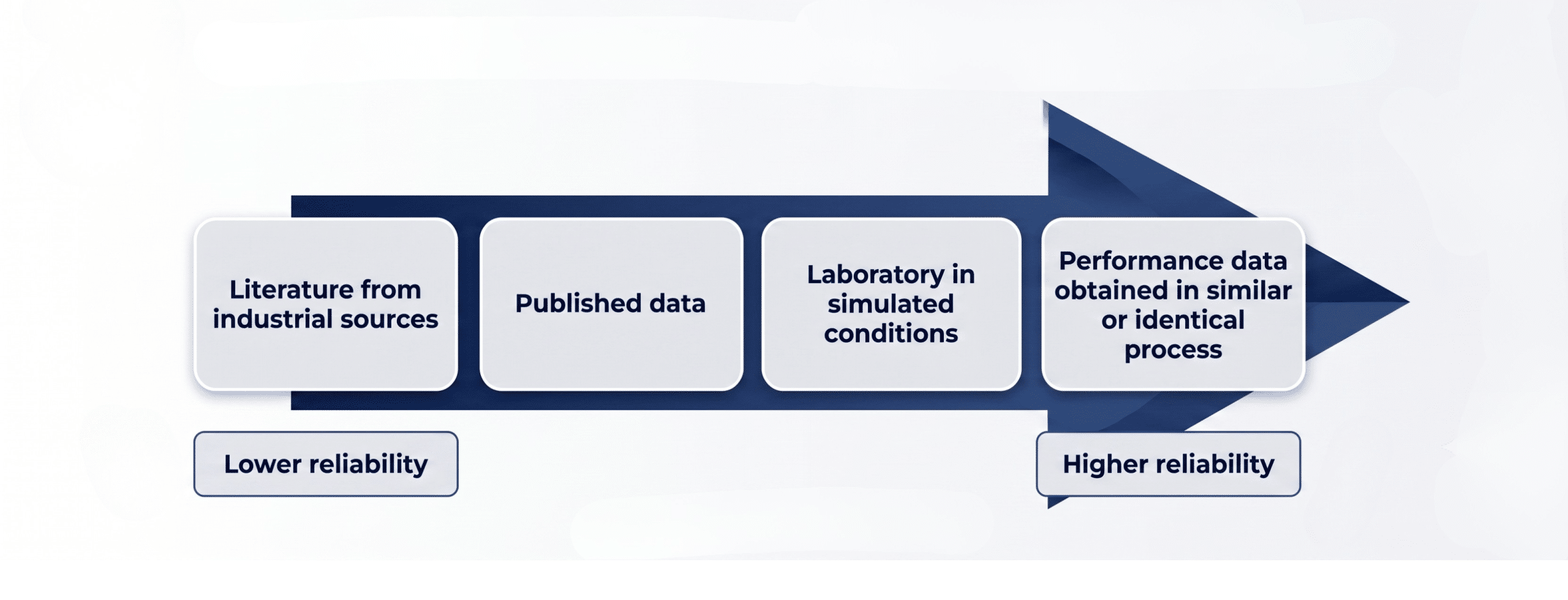
Testing is also often used as a comparative tool. When two materials are tested under controlled laboratory conditions, the material that performs better in the lab will often perform better in the field. This holds as long as all test conditions reflect the key environmental factors driving corrosion in service, which can be difficult. For example, this may be useful in determining the most effective protective coating or corrosion inhibitor for a given application.
Corrosion testing is one of the most important aspects of corrosion control. It is used to advance technology and to help determine the most effective and economical means to achieve acceptable performance.
Since many factors affect corrosion behaviour, there is no universal corrosion test methodology, although many tests and practices have been standardized by organizations such as ASTM, NACE, or ISO.
Three Reasons to Perform Corrosion Testing
Quality control and process verification. Includes verifying a process meets minimum performance thresholds.
Evaluate a new process or rank material performance against a known baseline under identical conditions.
Establish a numerical accelerated factor and estimate how long a product will perform acceptably in service.
THE FINANCIAL CASE
The Co$t of Corro$ion
Corrosion is the source of costly damage all around our planet. Worldwide, this damage costs up to 2.5 trillion US dollars annually, which is equivalent to 3.4% of the global GDP (Gross Domestic Product). This figure represents direct costs only. It escalates drastically if you consider indirect impacts such as loss of productivity, safety, environmental impacts, and many others.
Every year, the United States is estimated to lose USD $451 billion on corrosion repairs, which represents 11% of the country’s total budget and 2.7%2 of the country’s GDP. In Canada, 5.2% of the country’s GDP is lost to corrosion every year.
$2.5T Annual global cost of corrosion damage
3.4% Share of global GDP
$451B Annual US corrosion repair cost
5.2% Share of Canadian GDP lost annually
At the industrial level, rust on metal, for example, can pose health and safety concerns, lead to equipment failure, and contribute to production delays. Moreover, corrosion can affect a company’s reputation if customers aren’t satisfied with the product.
To make a long story short, corrosion is expensive. A sizable portion of these costs could be avoided through more effective use of existing technologies and sound corrosion management techniques. That is why we offer testing services that will give you a look into the future of your material’s behaviour so you can be certain of its performance.
AFFECTED SECTORS
Types of Industries Potentially Concerned by Corrosion Testing
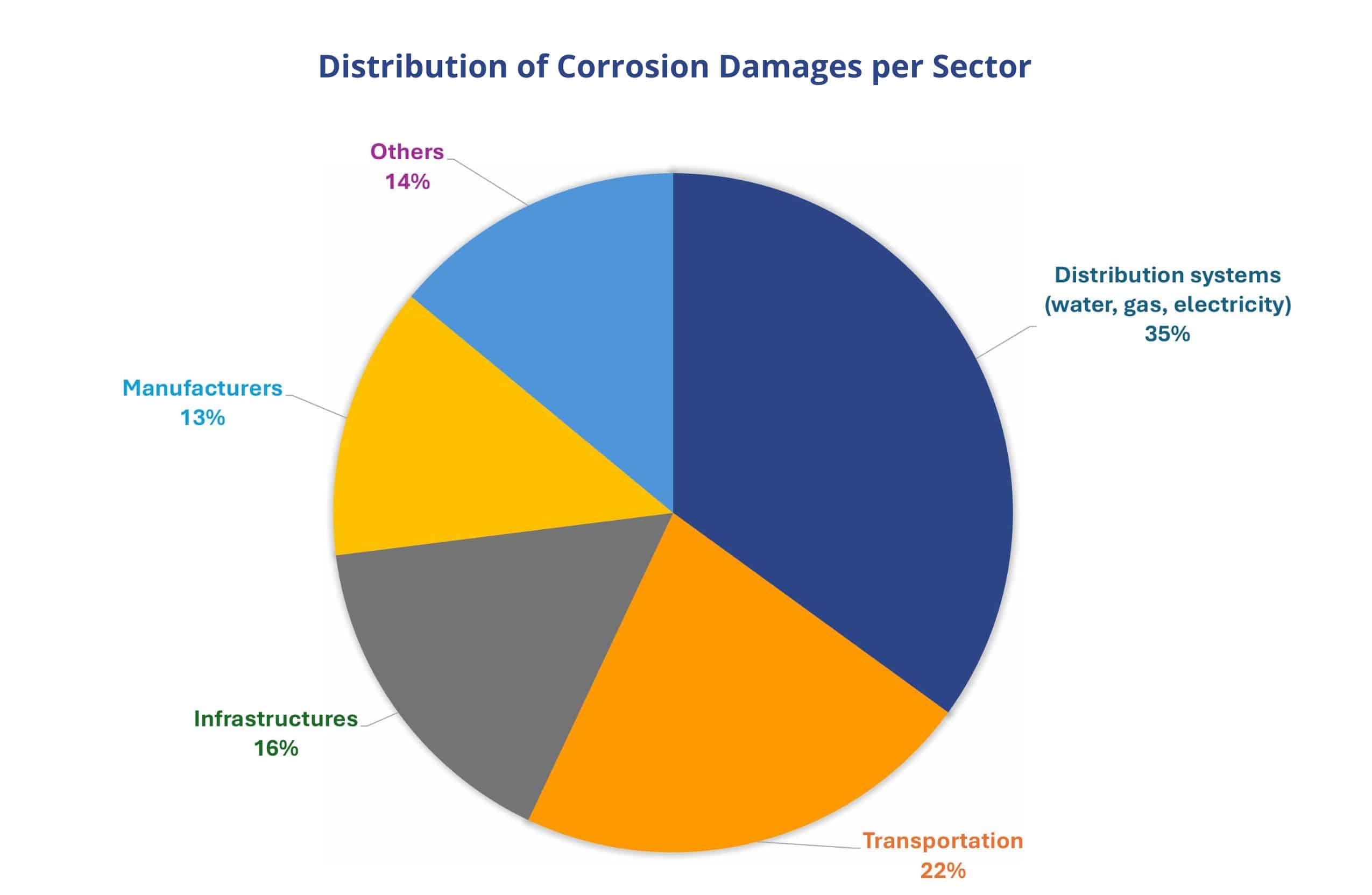
Corrosion affects a wide range of sectors, as shown in the diagram below, followed by a non-exhaustive list of industries that are particularly affected by corrosion. In these sectors, corrosion can compromise structural integrity, functional performance, safety, and aesthetic appearance, making corrosion testing a critical part of product qualification and lifecycle management.
Industries Affected by Corrosion (Non-Exhaustive List)3
| Industry | Corrosion Risks & Concerns |
|---|---|
| Automotive & Aircraft | Corrosion can result from external exposure, internal combustion exposure, or internal functional liquids. |
| Commercial Aircraft | Corrosion comes mostly from aluminum alloys. They are usually protected, but failures may occur in joints, faying surfaces, or crevices created by various factors. |
| Military Aircraft & Equipment | This type of equipment should resist various extreme environments. |
| Electronics | Corrosion-related failures can be significant due to the complexity of systems and increasing reliability demands. |
| Telecommunications | This type of equipment can be subjected to three different corrosive environments: air, underground installations, and buried conditions. |
| Highways, Tunnels & Bridges | Most materials used in transportation infrastructure are exposed to multiple environments (atmospheric, soil, and water), which can be corrosive in nature. |
| Marine: Piers & Docks | Corrosion testing is typically used to evaluate potential material candidates for such applications. |
| Electric Power | Corrosion is the main cause of power line deterioration, affecting multiple components. |
| Nuclear Power | Corrosion is the main cause of power line deterioration, affecting multiple components. |
| Steam Generation | Critical areas include stress corrosion cracking in pressurized reactors, corrosion fatigue of turbine blades, and corrosion failures in tubing systems. |
| Medical & Dental | Synthetic biomaterials used in medical or dental care may be metallic in nature and, as such, be subjected to corrosion. |
The numbers make the case for testing, but knowing that corrosion is expensive does not yet tell you how to stop it. That requires going back to basics: what corrosion actually is, why it happens at the chemical level, and what forms it takes in real products and environments. Without that understanding, choosing the right test is little more than guesswork. Chapter 3 is where the science begins.
- ASTM International. 2005. Corrosion Tests and Standards: Application and Interpretation. Page 52. Second Edition. ISBN 0-8031-2098-2.
- Gould M., Koch G., Moghissi O., Payer J., Thompson N. & Varney J. 2016. International Measures of Prevention, Application, and Economics of Corrosion Technologies Study. Nace International. Impact Report.
- Baïlon J.-P. & Dorlot J.-M. 2002. Des matériaux. 3rd edition. Note: Though published some time ago, this reference continues to be used in the field.
Put Your Materials to the Test
Micom Laboratories offers a full range of corrosion testing services to help you evaluate material performance, validate protective coatings, and meet industry standards. From ASTM B117 to ASTM G85 and ISO 9227, our testing experts can test according to national and international standards or design a customized protocol tailored to your product’s actual field conditions.
Ready to Build a Test Plan?
Corrosion is expensive, but the right testing program helps you catch problems early, protect your product’s reputation, and make material decisions you can defend. Our specialists can help you define your objectives and select the right standard.