

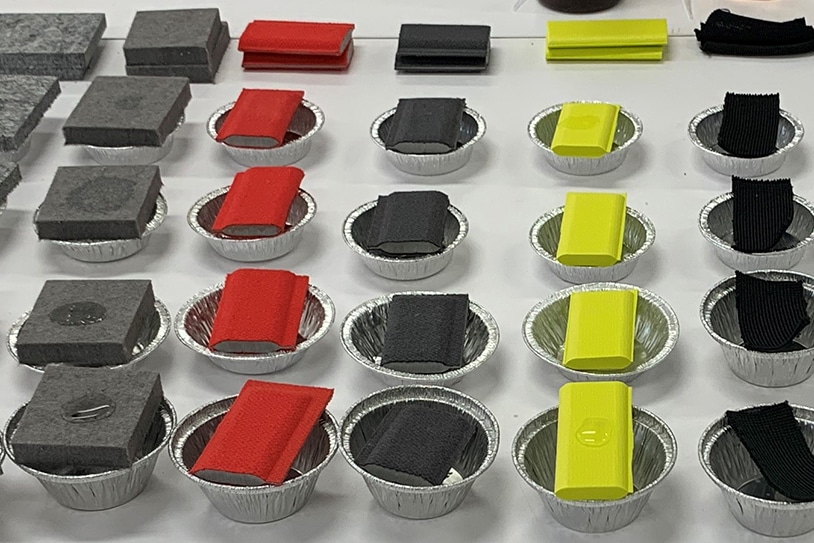
Using UVc as a Disinfectant Against COVID-19 Development Process for a Testing Method
With Covid-19, C-Difficile and other micro-organisms present in long-term care facilities, clinics and hospitals, the effectiveness of disinfection activities in care and work areas requires stringent and effective disinfection procedures. In addition to cleaning surfaces with chemical disinfectants requiring manual labor, different sanitation techniques have emerged: hydrogen peroxide atomization, electrostatic disinfection and UVc disinfection.
All of these methods have their advantages and disadvantages both from a disinfection standpoint as well as their effect on people’s safety due to relative proximity during the disinfecting process. Their respective costs also come into play. An often overlooked aspect is the impact of different disinfection processes on the various surface materials used in different work areas. In fact, although few people pay attention to this issue, there is a very wide range of materials used in these different work areas where disinfection procedures are likely to be used. The work areas themselves, the different equipment used to provide care, electronic devices, etc.; all of these materials run the risk of having their surfaces damaged by procedures aimed at destroying microorganisms. Some of the damages sustained are purely cosmetic and in many cases may not have an immediate effect. But what happens in the mid and long-term? Will the surface become more porous? Will it begin to absorb various biological fluids that standard disinfection methods can no longer reach?
Few or no methods evaluate this perhaps too often neglected aspect of disinfection. The Business Institutional Furniture Manufacturer’s Association (BIFMA) has published guidelines to evaluate the impact of different processe